
Gilpin CSU Extension Educator Jennifer Cook held a Mountain Pine Beetle workshop in the Dory Lakes subdivision on November 2, 2024. The fall workshop aimed to educate participants on the signs of mountain pine beetle infestations in the area and learn what to do if property owners find infected trees on their property.
This item is available in full to subscribers.
At this time, we ask you to confirm your subscription at www.themtnear.com, to continue accessing the only weekly paper in the Peak to Peak region to cover ALL the news you need! Simply click Confirm my subscription now!.
If you are a digital subscriber with an active, online-only subscription then you already have an account here. Just reset your password if you've not yet logged in to your account on this new site.
Otherwise, click here to view your options for subscribing.
Questions? Call us at 303-810-5409 or email info@themountainear.com.
Please log in to continue |
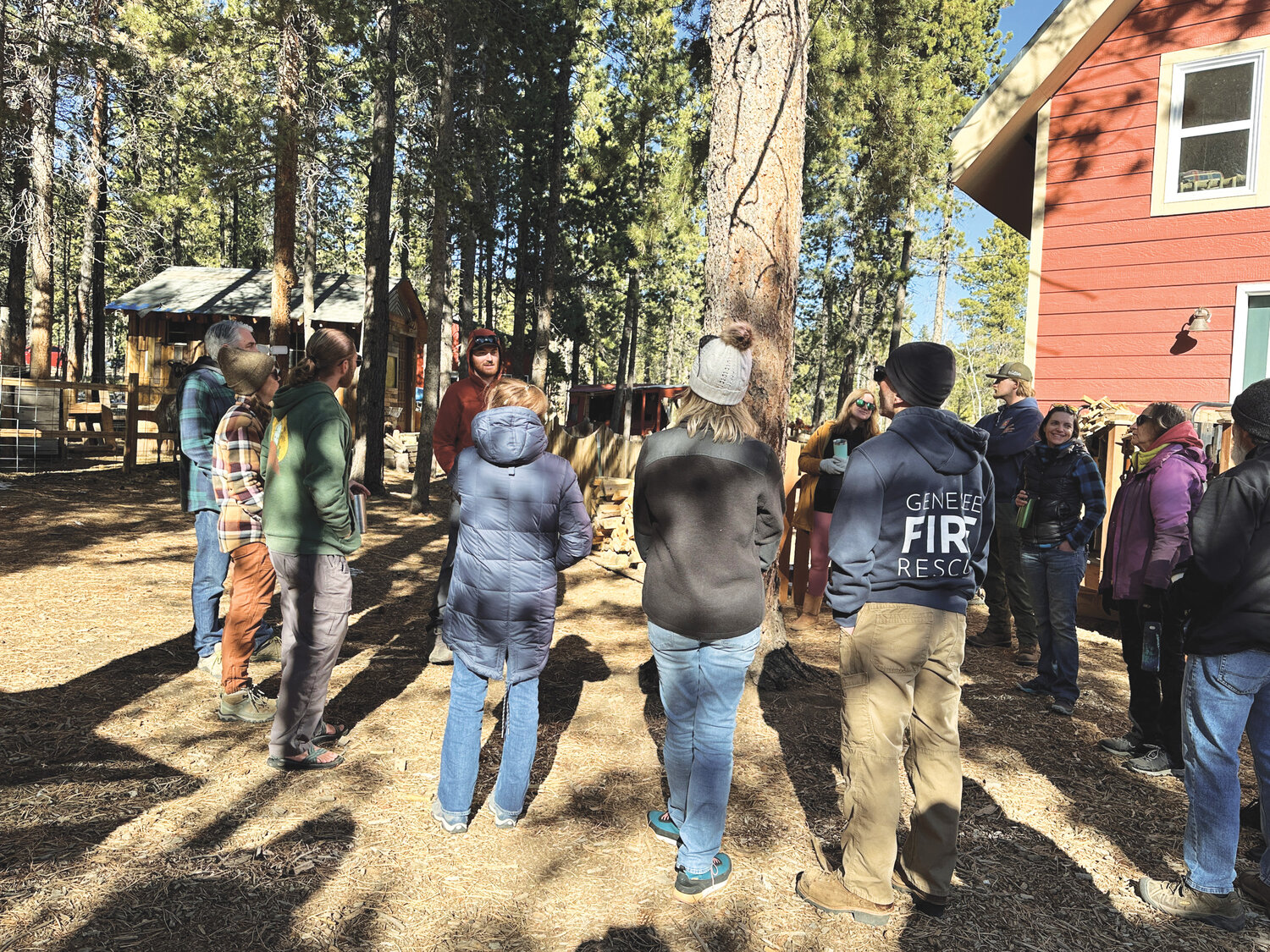
Gathering round a dead tree
Workshop participants learning how to identify a pine tree that has been attacked by Mountain Pine Beetles.
Gilpin County – Gilpin CSU Extension Educator Jennifer Cook held a Mountain Pine Beetle workshop in the Dory Lakes subdivision on November 2, 2024. The fall workshop aimed to educate participants on the signs of mountain pine beetle infestations in the area and to learn what to do if property owners find infected trees on their property.
Kelby Woodard from the Clear Creek Watershed & Forest Health Partnership and Andrew Steffe, Timberline Mitigation Coordinator, were also on hand to help Cook with the presentation and answer questions about the current epidemic.
The centerpiece of the presentation was a ponderosa pine on private property that had been attacked this year and showed the classic signs of pitch tubes and sawdust at the base of the tree. Even though the tree still showed green needles, it was severely infected and needed to be cut down and treated.
Cook started her presentation by discussing the life cycle of beetles, how they can kill trees, and how they seem to be favoring big ponderosa pines during this epidemic. Cook also showed samples of different pine needles to help participants distinguish between ponderosa, lodgepole, and limber pines.
Woodard spoke about treatment and prevention options. Trees infected this year need to be cut down and treated before the beetles emerge and fly next summer. Even though the slash pile is closed for the season, Steffe said that property owners can call Public Works to arrange for infected logs to be dropped off all winter.
Prevention methods included hanging pheromone packets on trees, spraying high value trees with pesticides, and encouraging natural predators like woodpeckers to stick around by hanging out suet packs.
Pesticides are highly controversial because they indiscriminately kill other insects and pollinators, but they are 99% effective in keeping a high value tree from being infected and killed. Pesticides have to be administered by licensed exterminators on a calm day.
Cook spoke about the use of pheromone packets and the plausible possibility that the packets confuse beetles into bypassing trees with packets on them. There are no definitive studies to prove that they work, but there is anecdotal evidence that trees with packets escape being attacked when the swarms aren’t thick.
It was an engaging workshop with many questions from the participants. Cook concluded her presentation by encouraging property owners to check their trees now for signs of pine beetles and treat any that they find are infected.
Contact Jennifer Cook at 303 582-9106 or Jennifer.cook@colostate.edu for more information about identifying and treating infected pine trees. Contact Andrew Steffe at 720-398-1972 or asteffe@timberlinefire.com for a free wildfire mitigation assessment. The website to set up an appointment is timberlinefire.com/mitigtion-wildfire-safety-and-prevention.


