This week’s focus on Langston Hughes begins a Black History Month series highlighting figures connected to Lincoln Hills
This item is available in full to subscribers.
At this time, we ask you to confirm your subscription at www.themtnear.com, to continue accessing the only weekly paper in the Peak to Peak region to cover ALL the news you need! Simply click Confirm my subscription now!.
If you are a digital subscriber with an active, online-only subscription then you already have an account here. Just reset your password if you've not yet logged in to your account on this new site.
Otherwise, click here to view your options for subscribing.
Questions? Call us at 303-810-5409 or email info@themountainear.com.
Please log in to continue |

A photo of Langston Hughes.
GILPIN COUNTY — This week’s focus on Langston Hughes begins a Black History Month series highlighting figures connected to Lincoln Hills, with future installments including Duke Ellington and other artists who found rest, community, and creative space in the Rockies.
“I’ve known rivers:
I’ve known rivers ancient as the world and older than the flow of human blood in human veins.
My soul has grown deep like the rivers.”
— Langston Hughes, The Negro Speaks of Rivers (1921)
Hughes wrote about rivers as memory, history, and endurance. Not just water, but movement. Time. People carrying stories forward. When he wrote about rivers, he was speaking about connection and how the past continues to flow into the present.
At Lincoln Hills, that idea became literal, visceral.
The historic resort community sits along South Boulder Creek, which runs through the valley and past many of the original cabin sites. For early visitors, the creek was part of daily life: a steady sound through the trees, a place to walk, to fish, to sit, and to think.
Today, stretches of that same creek are part of the private Lincoln Hills Fly Fishing Club, an exclusive, membership-based fishing operation.
Langston Hughes, a leading figure of the Harlem Renaissance, was known for poetry that sounded like real people talking. He wrote about workers, families, dreams, frustration, and pride. His lines were direct. His subjects were everyday life. He believed poetry should be understood, not decoded.
He contributed a substantial body of poetry and several plays. One must wonder if he drew inspiration for his work when visiting Gilpin County.
During segregation, Lincoln Hills became a rare mountain retreat for African Americans who were limited in where they could travel and stay. Located near Pinecliffe and Rollinsville, the community offered space to rest, gather, and own property at a time when those opportunities were restricted elsewhere.
The resort was a safe haven in the 1920s and 1930s, a place of refuge for Black Americans, especially artists performing in Denver’s Five Points region.
Hughes was among the writers and artists who visited Lincoln Hills, linking the small mountain community to a national movement in Black literature and culture. Other visitors included Duke Ellington, Lena Horne, Count Basie, Billy Eckstine, and other major figures of the era.
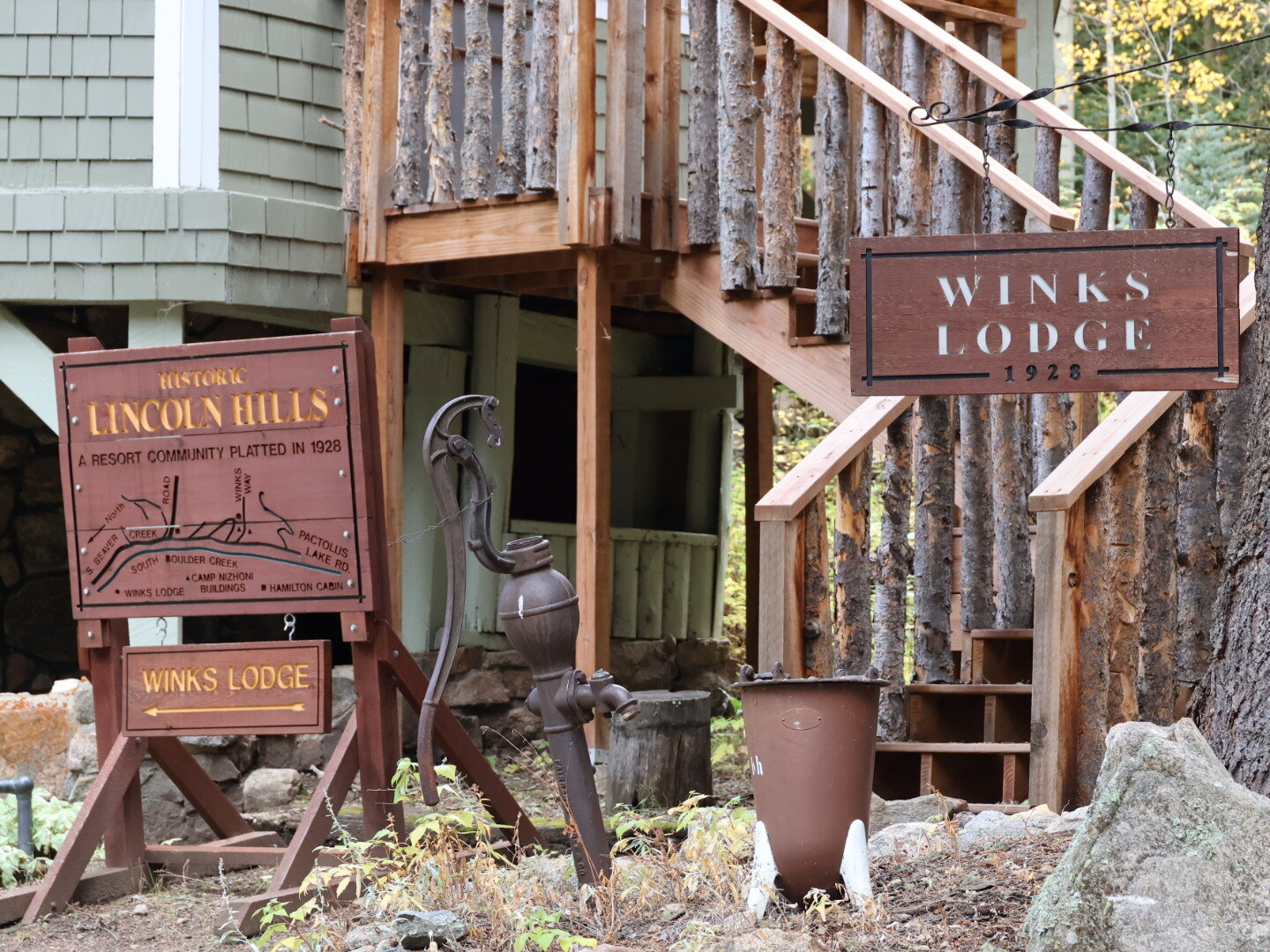
At the center of the community was Winks Lodge, built in the 1920s by Obrey Wendell “Winks” Hamlet. The lodge became a gathering place for travelers, musicians, and writers. It was where conversations stretched late, ideas were shared, and people could be themselves without explanation.
Hughes’s work often focused on ordinary lives and everyday dignity. Poems like “I, Too,” “Mother to Son,” and “Harlem” gave voice to hope, disappointment, and the gap between what America promises and what many people experience. His writing fits naturally into a place like Lincoln Hills, where people were building something for themselves in a world that often limited their options.
For some families, it was a long-term home base. Cabins were built. Girls attended Camp Nizhoni. Generations returned. South Boulder Creek kept running through it all, even as ownership and access to parts of the valley changed over time.
Suggested Langston Hughes reading
The Negro Speaks of Rivers
I, Too
Mother to Son
Harlem (A Dream Deferred)
Theme for English B
Let America Be America Again