
LINCOLN HILLS - February is Black History Month. Most Peak to Peak residents know that we have our own unique contribution to Black history here in Gilpin County: the Lincoln Hills community, which was created in 1922 as a resort in the Rocky...
This item is available in full to subscribers.
At this time, we ask you to confirm your subscription at www.themtnear.com, to continue accessing the only weekly paper in the Peak to Peak region to cover ALL the news you need! Simply click Confirm my subscription now!.
If you are a digital subscriber with an active, online-only subscription then you already have an account here. Just reset your password if you've not yet logged in to your account on this new site.
Otherwise, click here to view your options for subscribing.
Questions? Call us at 303-810-5409 or email info@themountainear.com.
Please log in to continue |


LINCOLN HILLS - February is Black History Month. Most Peak to Peak residents know that we have our own unique contribution to Black history here in Gilpin County: the Lincoln Hills community, which was created in 1922 as a resort in the Rocky Mountains that would “serve as an oasis for those suffering from racism.”
At the time, and for many years, it was the only leisure destination created by and for African Americans West of the Mississippi. Most of the community consisted of small lots with tiny cabins, but there was also the central gathering point of Winks Lodge, a small hotel (now a National Historic Landmark) which over the years hosted a number of Black celebrities as well as members of the African American middle class.
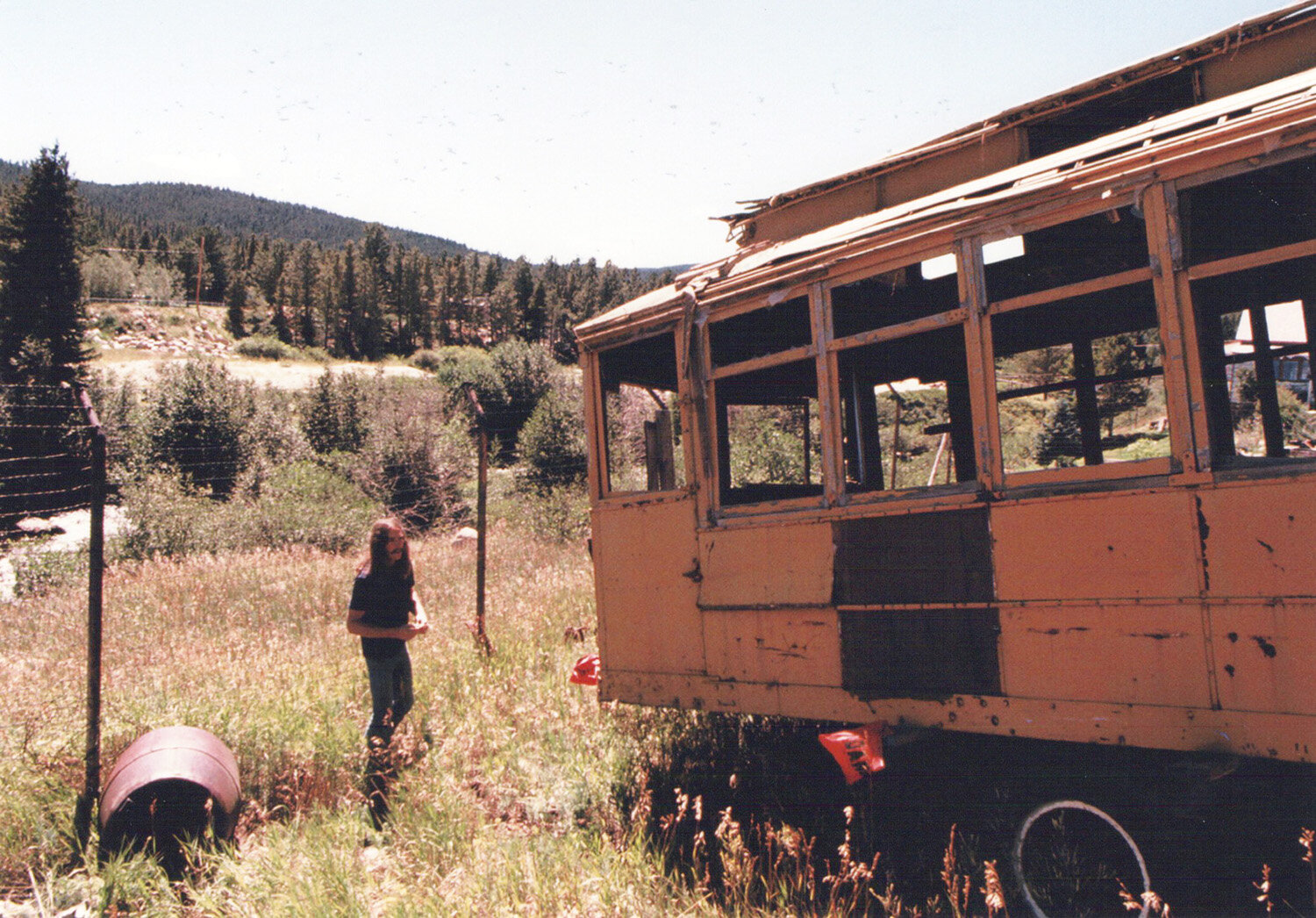
What many of us didn’t know is that for some time there was a trolley car located along South Beaver Road in the Lincoln Hills area.
According to Jimmy Keith: “The trollies were sold for $100 in Denver and two were hauled to S. Beaver Creek Road to be used as picnic gazebos. The fire department burned one trolley when cleaning up the S Beaver Creek area but fortunately, they then got in touch with me and I moved the second car to the Wolf Tongue Mill property in Nederland where I stored it.”
In the photos, “the one of me walking next to the car (long-haired guy) and a child inside the car, show the condition it was in back in 1974. I cleaned out the debris and found picnic supplies used by the Lincoln Hill community. The car is significant as it was part of early Colorado Black History. This cannot be overemphasized.
“I have also attached a couple of photos of myself moving the car to my storage yard in Nederland. I subsequently sold the car to the Forney Museum of Transportation in Denver. The museum later abandoned the car when they moved to their new location on Brighton Blvd.
“I later saw a newspaper article showing the car abandoned in a junk-filled field east of Denver. I believe that is where City of Arvada discovered it. The trolley has now been restored and is ready to go on display in Arvada.”
Here are two links to City of ASrvada’s website featuring the trolley: https://www.arvadaco.gov/526/Restoring-Arvadas-04-Trolley and https://arvadaurbanrenewal.org/projects/trolley-park/


