
I attended the First Peoples Festival in Estes Park on Saturday, January 17, spending the afternoon between the Indigenous Vendor Market and the First Peoples Friendship Powwow at the Estes Park Events Complex, 1125 Rooftop Way.
This item is available in full to subscribers.
At this time, we ask you to confirm your subscription at www.themtnear.com, to continue accessing the only weekly paper in the Peak to Peak region to cover ALL the news you need! Simply click Confirm my subscription now!.
If you are a digital subscriber with an active, online-only subscription then you already have an account here. Just reset your password if you've not yet logged in to your account on this new site.
Otherwise, click here to view your options for subscribing.
Questions? Call us at 303-810-5409 or email info@themountainear.com.
Please log in to continue |

Black and white
Dancers stand waiting for Grand Entry during the Friendship Powwow at the First Peoples Festival.

Dancers move through the arena during intertribal dancing at the Friendship Powwow on January 17 in Estes Park.

Drumming and singing
Natives gather around the drum during the Friendship Powwow at the First Peoples Festival.
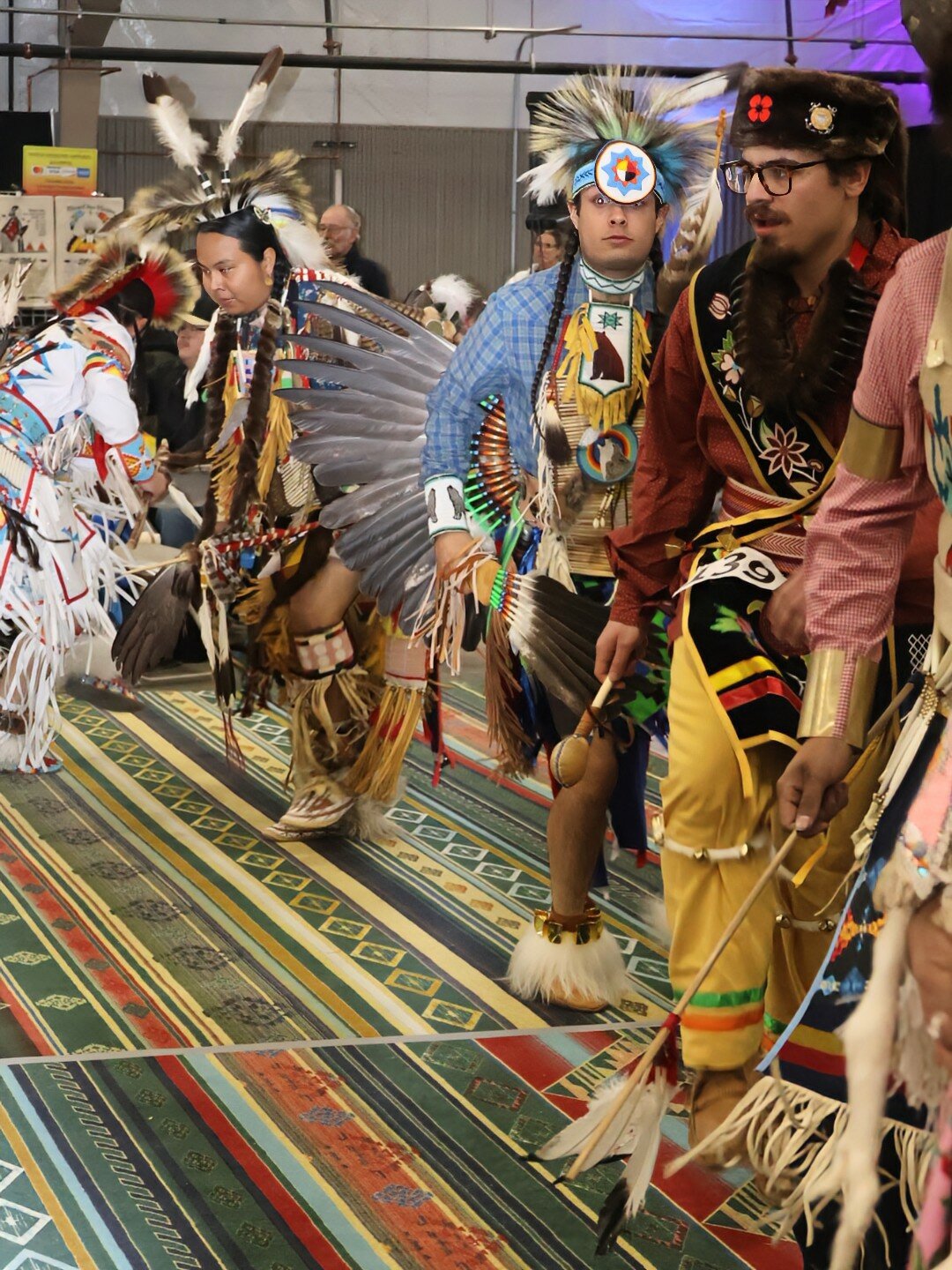
Male dancers line up in full regalia ahead of Grand Entry at the First Peoples Friendship Powwow. The procession honored veterans, elders, and the Nations represented.

Male dancers wearing feather bustles and beadwork participate in the Friendship Powwow at the First Peoples Festival.

Women line up in regalia during Grand Entry at the Friendship Powwow, held as part of the First Peoples Festival at the Estes Park Events Complex.

A member of the color guard carries the eagle staff during Grand Entry at the Friendship Powwow and plays a flute attached to it, honoring the Indigenous veterans and those currently serving.
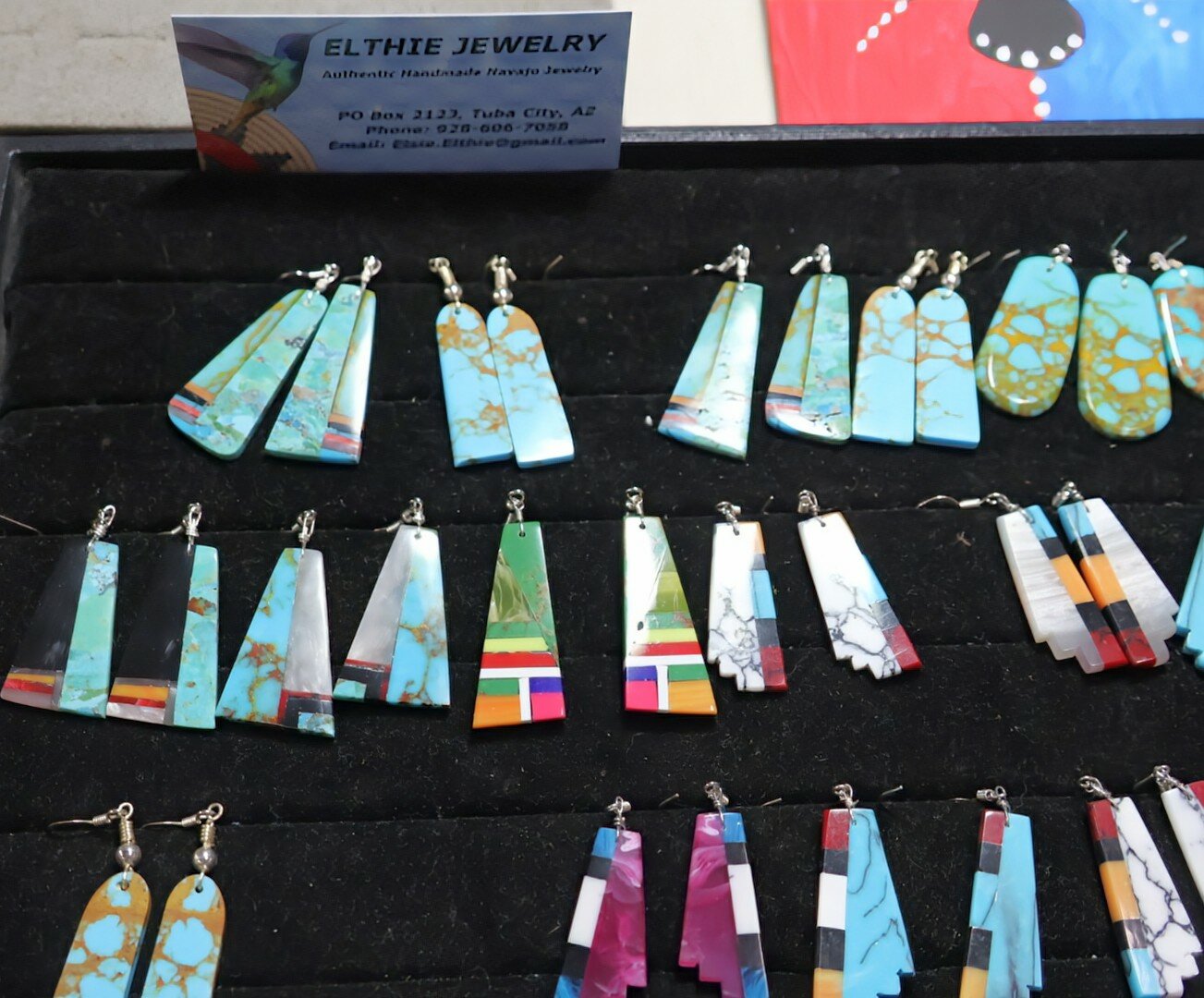
Handmade Navajo jewelry is displayed for sale at the Indigenous Vendor Market during the First Peoples Festival.

Beaded and embroidered moccasin-style boots are displayed at the Indigenous Vendor Market, showcasing detailed craftsmanship and traditional design.

Martin Red Bear sits in his booth, surrounded by brightly colored paintings and artwork, during the Indigenous Vendor Market.

Hand-painted clay turtles created by Yolanda J. La Mone are displayed at the Indigenous Vendor Market during the First Peoples Festival in Estes Park.

A painting by Carlin Bear Don’t Walk is displayed at the Indigenous Vendor Market during the First Peoples Festival. Bear Don’t Walk is a Crow and Northern Cheyenne artist whose work often centers on Native identity, history, and resilience.

Another powerful painting by Carlin Bear Don’t Walk is displayed at the Indigenous Vendor Market. The artist’s booth featured large-scale portraits and symbolic imagery.


ESTES PARK — I attended the First Peoples Festival in Estes Park on Saturday, January 17, spending the afternoon between the Indigenous Vendor Market and the First Peoples Friendship Powwow at the Estes Park Events Complex, 1125 Rooftop Way.
The third annual two-day festival celebrated Indigenous culture, art, music, and tradition. It brought together artists, dancers, drummers, and community members from across the United States, but mainly from the Southwest.
While the weekend also included a film symposium and a fashion show, my time was spent in the marketplace and at the powwow, where much of the interaction unfolded through conversation, craft, and ceremony.
Inside the vendor hall, booths were filled with handmade pottery, jewelry, paintings, leatherwork, and clothing, all created by artists belonging to federally recognized Native American Nations.
Some vendors were makers working directly with clay, stone, and metal. Others carried work gathered through long relationships built within Indigenous communities.
One of those vendors was Prescott, from Prescott Art and Trade Goods, who spoke at length about decades spent buying, selling, and circulating Indigenous art and jewelry.
He described helping to form a co-op affiliated with a church and traveling widely across the Midwest and the East Coast. He created opportunities for Native artists to earn money at a time when employment options were limited.
“Back in the ’70s and ’80s, white people wouldn’t hire Indians,” Prescott said. “So I was their only source of money.”
Prescott explained that artists would bring him jewelry or artwork when they needed cash for food or necessities. Sometimes they returned to reclaim the pieces. Sometimes they didn’t.
“I’m not a pawn shop,” he said. “I’m just trying to help.” He said the system allowed him to keep money circulating so he could continue buying work when people needed it most.
Several artists spoke about the labor and time behind their work. Yolanda J. La Mone, who sells under the name Original Clay Creations, said each of her clay pieces is made by hand, a process that requires repetition, precision, and patience.
Nearby, large paintings by Crow and Northern Cheyenne artist Carlin Bear Don’t Walk filled an entire wall of his booth. His work, which often depicts Native figures set against vivid, symbolic backdrops, drew much attention from customers throughout the day.
Together, the vendors shared a commitment to sustaining art as both a livelihood and a cultural expression, like Prescott’s account of how Indigenous artists have long relied on one another to keep their work and communities moving forward.
As the afternoon progressed, attention shifted to the Friendship Powwow in the adjoining building.
At first, the drums were covered with blankets, and groups huddled around them, as if they were fires fighting the cold. Once uncovered and played, the drums' sound carried through the complex as dancers performed the Grand Entry. Spectators rose as the color guard entered, followed by dancers of all ages wearing full regalia.
The powwow featured multiple drum groups and dance styles throughout the afternoon and evening, along with prayers and acknowledgments honoring veterans, elders, and the Nations represented.
Announcements between songs invited attendees to upcoming powwows across Colorado, connecting the Estes Park gathering to a wider network of Indigenous events and communities.
I left the festival carrying more than notes and photos. I’m a Cherokee from Oklahoma, and standing next to the drummers during the powwow was something I felt in my body as much as I heard.
The force of each strike landed hard, the sound moving through the floor and into my chest, while the singers’ voices echoed and lingered long after the song ended. It stayed with me.
Before leaving, I bought a pair of brass dragonfly earrings from a vendor whose family comes from the Chaco Canyon area of New Mexico. It was a small way to commemorate the day and honor the craftsmanship of the First Peoples.


