
Nederland artist Evan Flowers is reviving the historic craft of reversed glass gilding and painting
This item is available in full to subscribers.
At this time, we ask you to confirm your subscription at www.themtnear.com, to continue accessing the only weekly paper in the Peak to Peak region to cover ALL the news you need! Simply click Confirm my subscription now!.
If you are a digital subscriber with an active, online-only subscription then you already have an account here. Just reset your password if you've not yet logged in to your account on this new site.
Otherwise, click here to view your options for subscribing.
Questions? Call us at 303-810-5409 or email info@themountainear.com.
Please log in to continue |
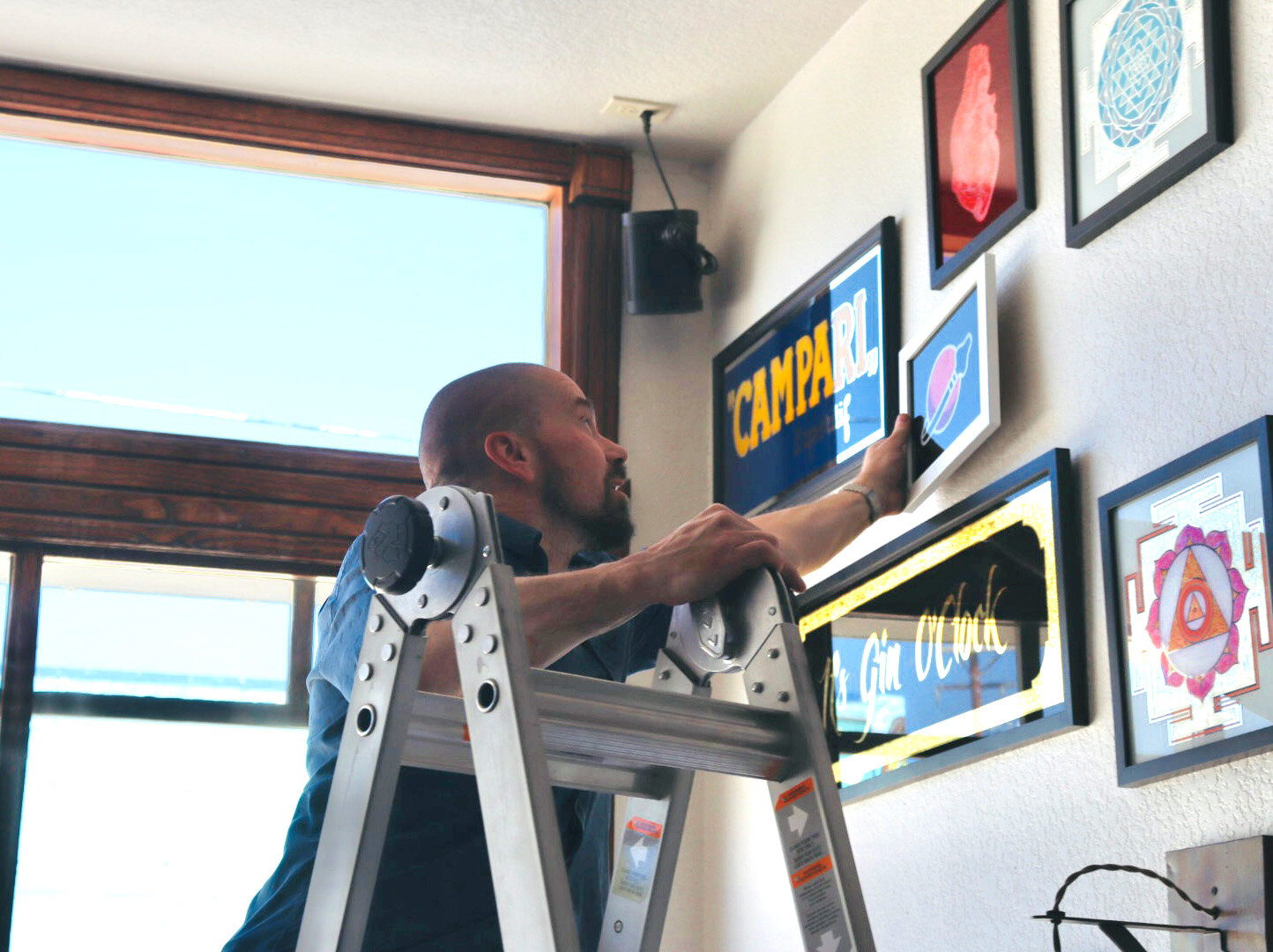
Evan Flower hangs up his glue-chipped glass art pieces at Crosscut Pizzeria in Nederland, viewable now through June 29.
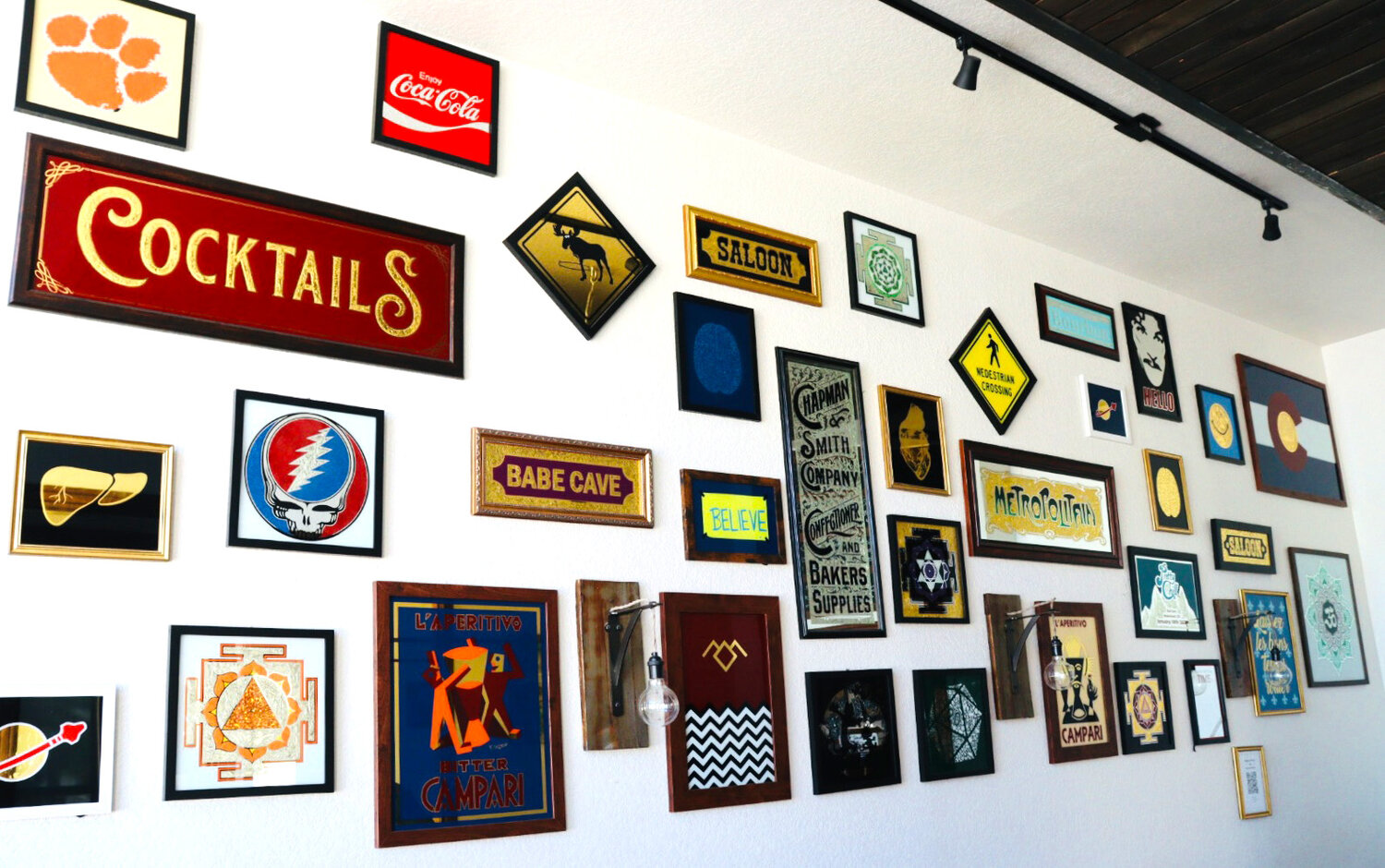
The style of art was born in Victorian-era England and came to the US during the days of the Old West, before prohibition and popularization of electricity nearly made the industry extinct.
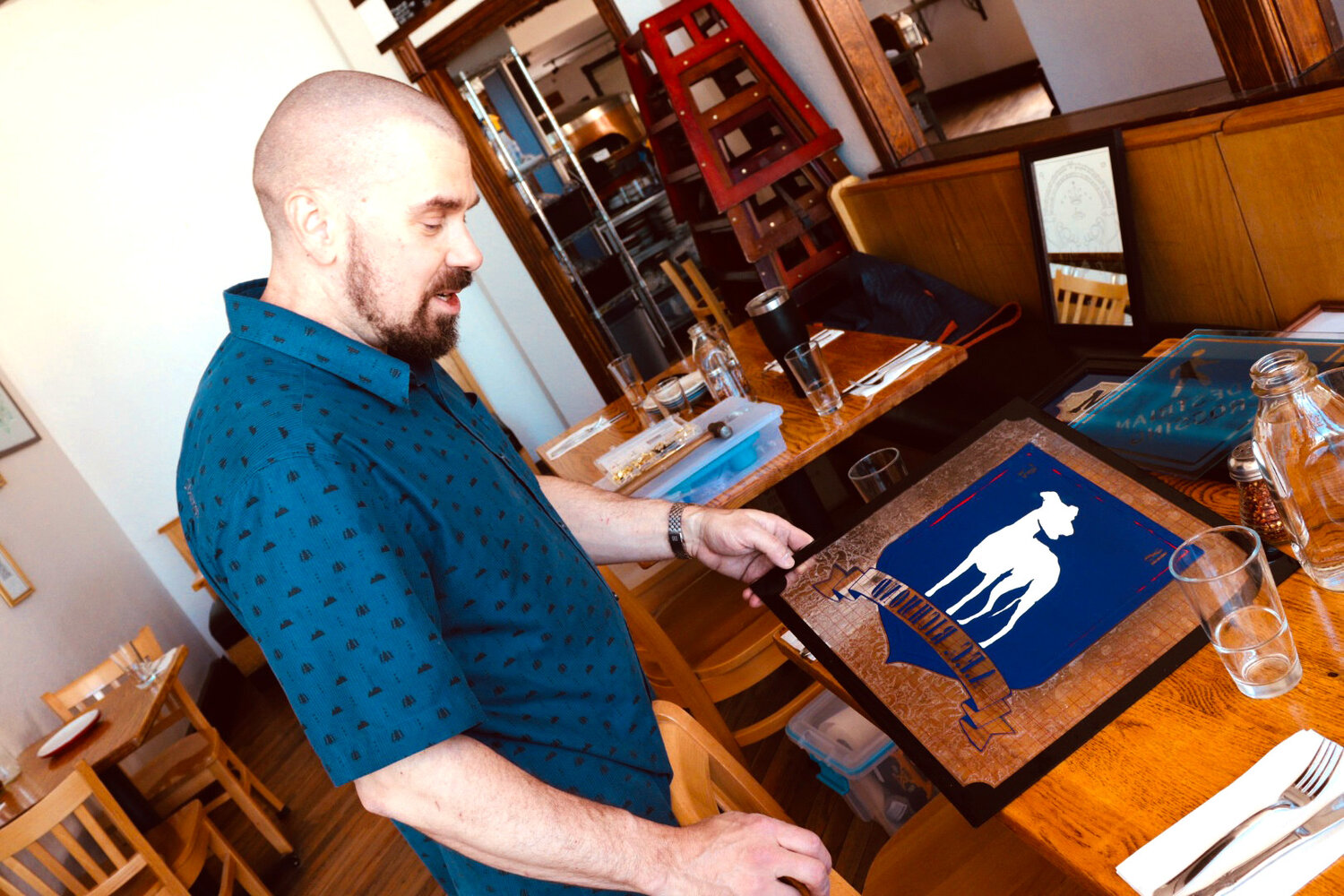
Flower demonstrates a work in progress, inspired by old English pub signs and the fictional soccer team from the hit show "Ted Lasso."
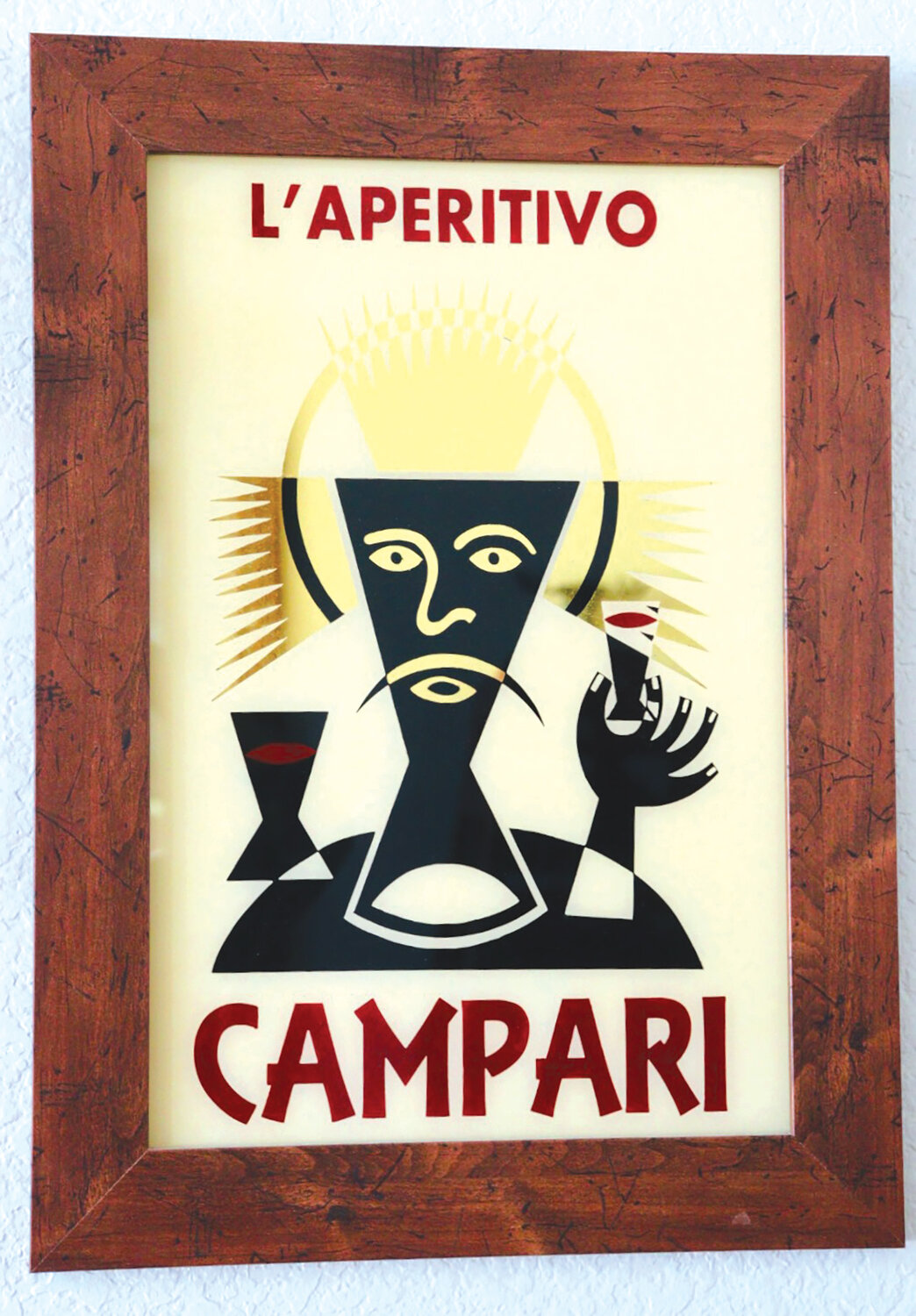
A piece inspired by the art of Fortunato Depero from the 1920s Italian futurism movement, which was used by the Campari brand to sell their liqueur.

A piece paying homage to the infamous "Black Lodge" from the classic 1990s murder mystery "Twin Peaks."

The artist himself, Evan Flower, poses against a wall full of his works demonstrating progress and dynamic skill as an artist and craftsman.


NEDERLAND — Nederland artists don’t just paint. They don’t just create. They have this uncanny mixture of curiosity and patience that drives them to resurrect the skills of experienced masters of hundreds-year-old crafts and techniques.
Never content with presenting surface level work, Nederland artists truly live their art—they experience it, from conception to completion.
The same philosophy applies to Evan Flower and his work in the art of reversed glass gilding and painting. And though he wouldn’t call himself an artist, coming from more philosophical and technical pursuits, his ability to use a near-forgotten medium to express his inspirations and need to experiment says otherwise.
“My academic background is in humanities, philosophy, and history, and my career background is in IT and consulting,” Flower told The Mountain-Ear. “But I just saw this style and thought it was really cool.”
Flower's work harkens back to an era when craftspeople were in high demand, where every city street corner would showcase the finest of quality work in architectural design as well as in supplemental flourishes. Artisans would create custom-designed and locally-manufactured signs and glass accoutrements, including colorful window displays and decorative mirrors.
“All of this comes out of sign-writing tradition, which is a trade—an artistic trade,” Flower explained. “It started in Victorian England and it migrated to the US.” He noted that the style was popular in saloons across the Old West, until prohibition and electric signs killed the industry.
“It was almost extinct. The UK keeps a list of endangered crafts and it was in the red category, meaning there were one out of a dozen people in the UK still doing this.”
After inspiration had hit him and he fell down an internet rabbit hole—getting him in touch with UK glass master David A. Smith—Flower began utilizing his basement as a workspace where he could learn, practice, and experiment with his newfound craft, turning his dream visions into physical pieces of beautiful, unique art.
The art form involves a piece of mirrored glass to be sandblasted, with paint and enameled glitter applied where desired, and a layer of glue to be applied for the intricate chipping process.
“This is Victorian-era stuff, so you’re using things from that time, like this animal skin glue, which is the nastiest smelling stuff—but it’s the only thing that works,” Flower said.
“You apply this glue layer to just the places you want to be chipped, and as it dries it shrinks and rips pieces of glass out. When the glass breaks like that it becomes shiny,” he continues, “so you apply the gold leaf on it and it keeps that shininess.”
From his very first piece—a shining 20-sided game die, with an emerald green background and tiny Dungeons & Dragons-inspired etchings on each side—to his most recent commission for the 2026 Pretty Chill Rail Jam—a custom reward that showcases a jagged mountain face in cracked silver glass, with glittering cool blue writing, all outlined in pearl white—Flowers’ work truly brightens the walls at Crosscut.
“I’m most drawn to the historical stuff, the old school signage and advertising,” Flower noted as he spoke about how the exploration of his craft often breeds more inspiration. “I got this idea to do a two-tone, anatomical heart, with matte and bright gold. I thought that would be cool, so I made it.”
“One of the things that I have not had a chance to do yet that I would love to do is work on storefront windows,” he said, adding that such special client commissions are integral to the growth of his skill.
The current display of Flower's art at Crosscut Pizzeria and Taphouse is his first ever exhibition and will run through June 29, 2026. Much of his work can also be seen in other Peak to Peak establishments, including Knotted Root Brewery in Nederland and Gold Dirt Distillery in Rollinsville.
His pieces, whether they are recreations of famous styles or dedications to pop culture interests, truly reflect an industrious period of human history, where pride in one’s craft created a style and image that was sought after by collectors and business owners hoping to make an impression to the masses.
For more information and a deeper look into his craft and his inventory of pieces, go to: evanflower.com.
Crosscut Pizzeria and Taphouse is located at 4 East 1st Street in Nederland.


